
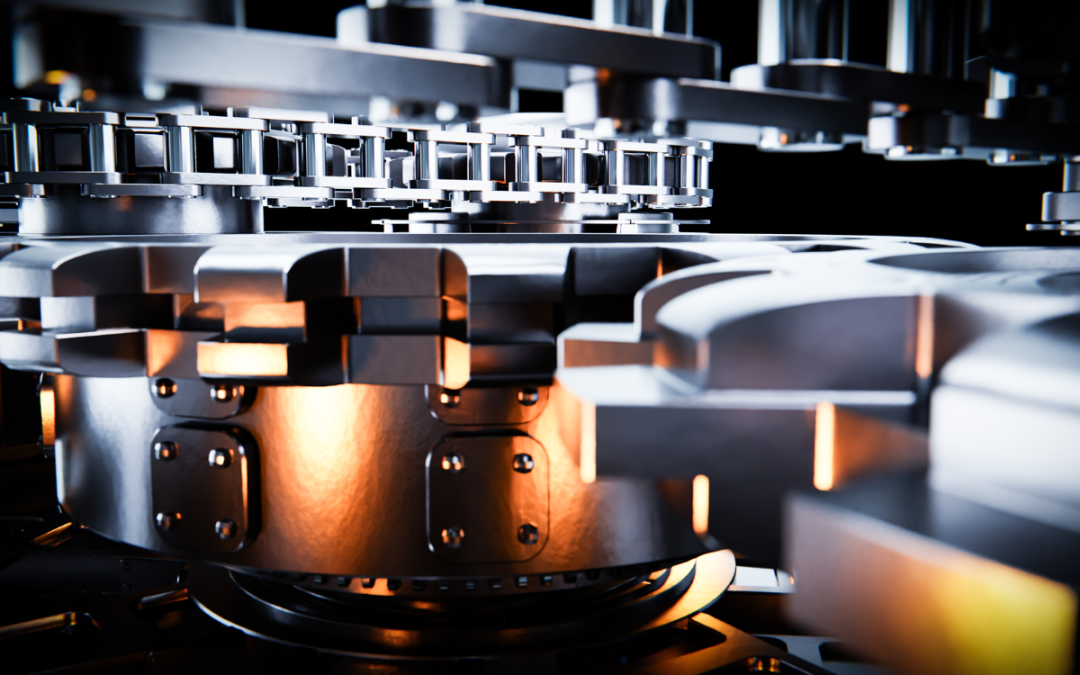
In modern industrial environments, rotating shafts and drive systems are at the heart of almost every production process. From electric motors and gearboxes to belt drives, pumps, and fans, rotational components ensure motion, power transmission, and productivity. However, these components are also subject to wear, misalignment, vibration, and mechanical stress. Even small defects can escalate into major failures, unplanned downtime, and costly repairs if they are not detected early.
Detecting faults in rotating shafts and drives while machines are running is one of the biggest challenges in industrial maintenance. Traditional inspection methods often require stopping the machine, dismantling protective covers, or relying solely on indirect measurements such as vibration analysis. Industrial stroboscopes offer a powerful alternative: they make fast movements appear slow or completely stationary, allowing maintenance teams to visually inspect rotating components in real time without interrupting production.
This article explains how industrial stroboscopes are used to detect faults in rotating shafts and drive systems, why visual inspection remains indispensable, and how early fault detection can significantly improve reliability, safety, and efficiency.
Why Rotating Shafts and Drives Are Prone to Failure
Rotating components operate under continuous mechanical load. Shafts transmit torque, belts transfer motion, and couplings compensate for alignment tolerances. Over time, these elements are affected by fatigue, thermal expansion, lubrication issues, and external influences such as dust or moisture. Even minimal deviations can lead to imbalance, eccentricity, or oscillation.
A common problem in rotating shafts is misalignment. Slight angular or parallel misalignment between motor and driven unit may not be audible or measurable at first, but it increases bearing loads and accelerates wear. Belt drives can suffer from uneven tension, leading to slippage, vibration, or irregular motion. Gear-driven systems may develop tooth wear or backlash that becomes noticeable only under dynamic conditions.
The challenge is that many of these faults only occur at operating speed. Once the machine is stopped, the visual evidence disappears. This is where industrial stroboscopes become an essential diagnostic tool.
How Industrial Stroboscopes Make the Invisible Visible
An industrial stroboscope emits short, high-intensity light pulses at a precisely controlled frequency. When the flash frequency matches the rotational speed of a moving object, the object appears to stand still. By slightly adjusting the frequency, the movement can be slowed down visually, enabling detailed observation of rotational behavior.
Unlike high-speed cameras, stroboscopes do not record images. Instead, they rely on the human eye and real-time visual feedback. This makes them extremely practical for on-site inspections, especially in environments where quick decisions are required.
When applied to rotating shafts and drives, a stroboscope allows technicians to observe phenomena that would otherwise be impossible to see, such as shaft runout, belt flutter, coupling irregularities, or periodic deviations in rotation. These visual cues often reveal the root cause of mechanical problems long before they lead to failure.
Detecting Shaft Runout and Eccentricity
One of the most common applications of stroboscopes is the detection of shaft runout. Runout occurs when a shaft does not rotate perfectly around its central axis. This can be caused by manufacturing tolerances, bent shafts, improper mounting, or bearing wear.
With a stroboscope set to the correct flash frequency, the rotating shaft appears stationary. Any deviation from a perfect circular rotation becomes immediately visible. The shaft may appear to wobble, shift sideways, or oscillate rhythmically. These movements are often subtle and impossible to detect with the naked eye under continuous lighting.
Early detection of runout is critical because it directly affects bearing life, seal integrity, and overall system stability. Identifying the problem at an early stage allows maintenance teams to correct alignment or replace components before secondary damage occurs.
Identifying Problems in Belt and Chain Drives
Belt and chain drives are widely used due to their flexibility and cost-effectiveness, but they are also sensitive to tension, wear, and alignment issues. A stroboscope makes it possible to observe the behavior of belts and chains during operation without physical contact.
Using stroboscopic light, technicians can see belt oscillations, lateral movement, or periodic tension variations. A belt that appears to flutter or vibrate at specific points may indicate uneven wear, damaged pulleys, or incorrect tension. Chain drives may reveal irregular motion caused by stiff links or sprocket wear.
These visual insights are especially valuable because belt and chain problems often develop gradually. By identifying abnormal motion early, maintenance teams can adjust tension, realign pulleys, or replace worn components before a sudden failure disrupts production.
Analyzing Couplings and Drive Connections
Couplings are designed to transmit torque while compensating for slight misalignment between connected shafts. Over time, couplings can wear out, deform, or lose elasticity. When this happens, they may introduce vibrations or irregular motion into the system.
A stroboscope allows direct observation of coupling behavior under load. By making the coupling appear stationary, technicians can check whether all elements move uniformly or if certain parts lag behind or jump forward. Such irregularities are strong indicators of mechanical stress or internal damage.
Visual inspection with a stroboscope often reveals coupling issues earlier than vibration analysis alone, making it an effective complement to other condition monitoring techniques.
Fault Detection Without Stopping Production
One of the biggest advantages of industrial stroboscopes is that inspections can be performed while the machine is running at normal operating speed. This is particularly important in continuous production environments where downtime is expensive or impractical.
Stopping a machine for inspection not only interrupts production but can also mask certain faults. Components may settle into a neutral position once motion stops, hiding dynamic effects such as resonance or cyclic deformation. Stroboscopic inspection preserves the real operating conditions, providing a more accurate picture of mechanical behavior.
For this reason, stroboscopes are widely used in predictive maintenance programs. They enable maintenance teams to identify potential issues early, schedule repairs strategically, and avoid unexpected breakdowns.
Improving Safety and Reducing Risk
Visual inspection of rotating machinery is inherently risky if performed incorrectly. Industrial stroboscopes improve safety by allowing inspections from a safe distance without physical contact. There is no need to touch moving parts or remove protective guards unnecessarily.
At the same time, safety awareness is crucial. The apparent standstill created by a stroboscope can be misleading. Operators must always remember that the machine is still moving at full speed, even if it appears stationary. Proper training and safety procedures are therefore essential when using stroboscopic equipment.
When used correctly, stroboscopes contribute to safer maintenance practices and reduce the risk of accidents during inspection.
Practical Benefits for Maintenance and Quality Control
The ability to detect faults in rotating shafts and drives visually provides significant practical benefits. Maintenance becomes more proactive rather than reactive. Instead of responding to breakdowns, teams can address issues at an early stage, reducing repair costs and extending component life.
Quality control also benefits from stroboscopic inspection. In manufacturing processes involving rotating tools or rollers, stroboscopes help verify smooth operation and consistent motion. Any deviation can be corrected before it affects product quality.
In many industries, from manufacturing and packaging to energy and process engineering, industrial stroboscopes have become an indispensable diagnostic tool for ensuring reliability and efficiency.
Conclusion
Detecting faults in rotating shafts and drive systems is essential for maintaining reliable and efficient industrial operations. Industrial stroboscopes provide a unique and powerful way to make fast movements visible, enabling real-time visual inspection under actual operating conditions.
By revealing shaft runout, belt irregularities, coupling defects, and other dynamic issues, stroboscopes help prevent unplanned downtime, reduce maintenance costs, and improve overall system safety. As part of a modern maintenance strategy, they bridge the gap between traditional inspection methods and advanced condition monitoring technologies.
For companies aiming to improve reliability and gain deeper insight into their machinery, industrial stroboscopes are not just a useful tool—they are a strategic advantage.