
Information and advice on stroboscopes
Stroboscopes are essential tools in modern industrial inspection and measurement technology. They enable precise, non-contact analysis of moving objects and play a key role in quality control, maintenance, and process optimization across a wide range of industries. From rotational speed measurement to visual inspection of high-speed machinery, industrial stroboscopes provide reliable insights where conventional measurement methods reach their limits.
This blog focuses on stroboscope technology basics, explaining the fundamental principles behind strobe technology and how stroboscopes operate in real-world applications. Whether you are interested in the fundamentals of stroboscope technology, the operating principles of strobe lights, or the theory behind non-contact speed measurement, our articles offer practical and easy-to-understand explanations.
A strong emphasis is placed on industrial stroboscope applications, including the use of stroboscopes in manufacturing, mechanical engineering, and maintenance environments. We explore how handheld and stationary stroboscopes are used for rotational speed measurement, machine diagnostics, and visual inspection of fast-moving components. Topics such as stroboscope RPM measurement, industrial inspection techniques, and machinery monitoring are covered in detail.
In addition, this blog highlights the development of stroboscope technology, showcasing innovations, modern stroboscope designs, and advances in stroboscope performance. From classic xenon stroboscopes to modern, processor-controlled inspection devices, we take a closer look at how stroboscope technology continues to evolve and adapt to increasing industrial demands.
Whether you are an engineer, technician, or industry professional, this blog provides valuable insights into stroboscopes, strobe lights, and industrial stroboscope solutions—helping you better understand their capabilities, applications, and technological progress.
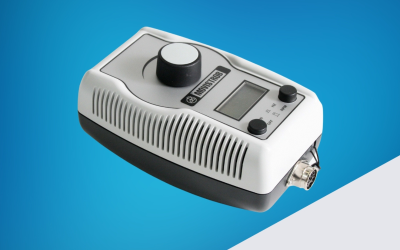
How to Find the Correct Flash Frequency
Finding the correct flash frequency is one of the most important skills when working with an industrial stroboscope. While the principle of stroboscopic inspection may appear straightforward, accurate and reliable results depend entirely on setting the correct...

What Does Flash Frequency (Hz / FPM) Mean?
Flash frequency is one of the most fundamental concepts when working with industrial stroboscopes. It determines how motion is visualized, how rotational speed is measured, and how accurately mechanical behavior can be analyzed. Despite its importance, flash frequency...

Fault Diagnosis on Conveyor Belts During Operation
Conveyor belts are among the most critical components in modern industrial production and logistics. They transport materials, products, and components through manufacturing lines, packaging systems, and distribution centers. In many industries, conveyor systems...

How to Measure Rotational Speed Using a Stroboscope
Measuring rotational speed is a fundamental task in industrial maintenance, quality control, and diagnostics. Shafts, motors, fans, rollers, and drive systems must operate within defined speed ranges to ensure efficiency, reliability, and safety. While traditional...

Difference Between a Stroboscope and a Tachometer
In industrial environments, measuring rotational speed is a fundamental task. Whether it involves motors, shafts, fans, rollers, or entire drive systems, knowing the exact speed of rotation is essential for quality control, maintenance, safety, and process...

Speed Measurement Without Stopping Production Lines
In modern industrial production, efficiency and continuity are critical success factors. Machines are expected to run reliably, processes must remain stable, and downtime is one of the most expensive risks manufacturers face. In this context, speed measurement plays a...

Sustainability in Industrial Measurement Technology
Sustainability has become one of the defining challenges of modern industry. Rising energy costs, stricter environmental regulations, and growing expectations from customers and partners are forcing companies to rethink how products are designed, manufactured, and...

Maintenance and Care of Industrial Stroboscopes
Industrial stroboscopes are precision instruments designed for demanding environments. They are used in maintenance, quality control, diagnostics, and process optimization across a wide range of industries. By making fast movements visible, they enable inspections...

Safety Aspects When Working with Industrial Stroboscopes
Industrial stroboscopes are powerful tools for visual inspection, diagnostics, and quality control in modern industrial environments. They make it possible to observe fast-moving or rotating components that would otherwise be invisible to the human eye. Shafts, belts,...
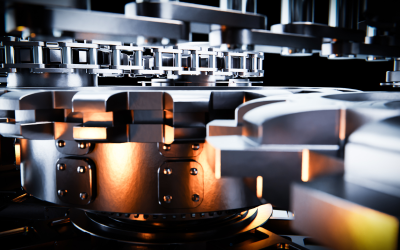
Detecting Faults in Rotating Shafts and Drives Using Industrial Stroboscopes
In modern industrial environments, rotating shafts and drive systems are at the heart of almost every production process. From electric motors and gearboxes to belt drives, pumps, and fans, rotational components ensure motion, power transmission, and productivity....

The development of stroboscope technology: From xenon flash to high-power LED
Introduction: From Show Effect to High-Tech Instrument Stroboscopes have fascinated people for decades. Originally known as effect lighting in nightclubs and at concerts, they have long since assumed a crucial role in industrial applications. Here, they are no longer...

How to measure rotational speeds contactlessly and precisely – step-by-step instructions
Non-Contact Precision: Measuring Rotational Speed with a Stroboscope Introduction: Precision Without Contact Measuring rotational speed is one of the fundamental tasks in industry and mechanical engineering. Whether motors, shafts, fans, or conveyor systems are...

Use of stroboscopes in quality control – detecting errors at an early stage
Quality as the Key to Success: Industrial Stroboscopes in Quality Control Introduction: Quality as the Key to Success In modern industrial production, quality determines competitiveness, efficiency, and customer satisfaction. Even the smallest defects can have...
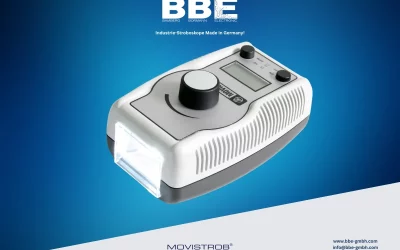
What is an industrial stroboscope? – How it works, technology, differences from simple stroboscopes.
Making Invisible Motion Visible: What Is an Industrial Stroboscope? Introduction: Making Invisible Motion Visible Modern industry is driven by precision, speed, and quality. Production systems often operate at extremely high cycle rates, drives rotate within fractions...