
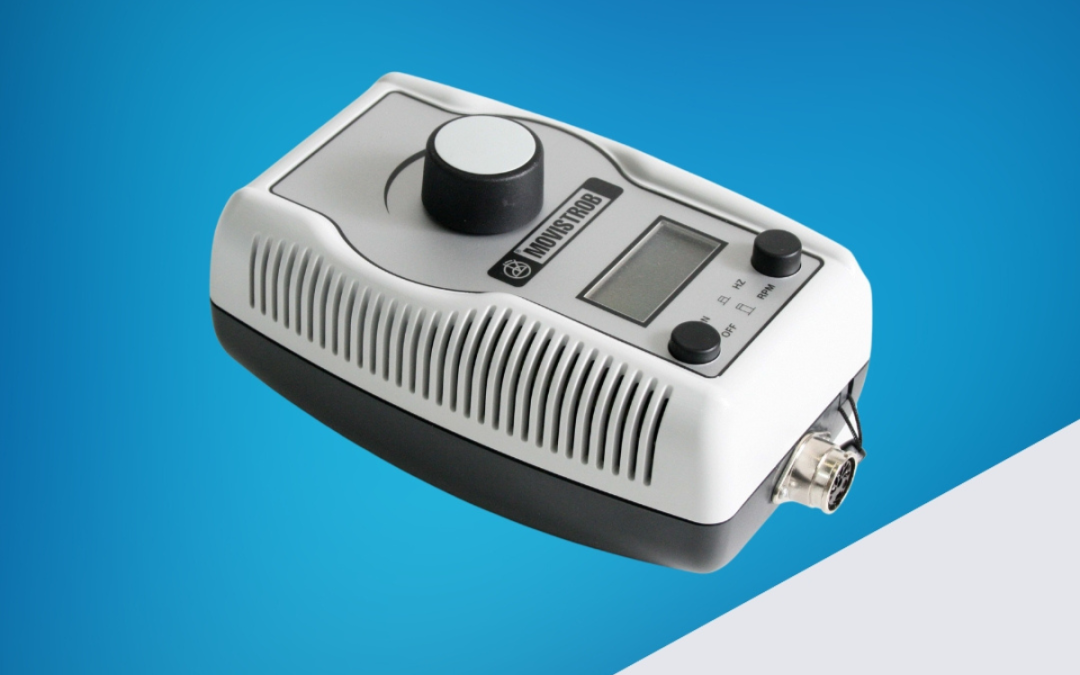
Finding the correct flash frequency is one of the most important skills when working with an industrial stroboscope. While the principle of stroboscopic inspection may appear straightforward, accurate and reliable results depend entirely on setting the correct frequency. An incorrect setting can lead to false interpretations, harmonic errors, and misleading visual impressions.
In industrial environments, where stroboscopes are used for speed measurement, motion analysis, and fault diagnosis, the ability to identify the correct flash frequency ensures precision, safety, and diagnostic confidence. Understanding how to approach this task methodically prevents common mistakes and maximizes the effectiveness of stroboscopic inspection.
This article explains how to determine the correct flash frequency step by step, how to distinguish true synchronization from harmonic effects, and how to apply this knowledge reliably in practical industrial applications.
Understanding What “Correct” Flash Frequency Means
The correct flash frequency is the frequency at which the stroboscope’s flashes are synchronized with the actual motion of the rotating object. When synchronization is achieved, the object appears stationary or moves very slowly relative to the observer.
However, synchronization does not automatically guarantee that the true rotational speed has been identified. Because of harmonic relationships between flash frequency and rotational speed, multiple frequencies may create a visual standstill. The correct frequency is the one that corresponds to the actual rotational speed of the object, not one of its fractions or multiples.
Understanding this distinction is essential before attempting to set the frequency in practice.
Starting With an Estimated Speed
In many industrial applications, the approximate rotational speed of a machine is known. Nameplates, technical documentation, or control systems often provide nominal speed values. Starting with this information simplifies the process of finding the correct flash frequency.
If the expected speed is 1,500 revolutions per minute, for example, the stroboscope can be set close to 1,500 flashes per minute as a starting point. From there, fine adjustments can be made to achieve visual standstill.
When no prior information is available, the frequency can be increased gradually from a low value until the motion begins to appear slower. This exploratory approach requires patience but is effective when performed systematically.
Observing the Motion as Frequency Changes
As the flash frequency approaches the rotational speed of the object, the motion will appear to slow down. At a certain point, the object will seem to freeze in position. This visual standstill indicates synchronization between flash frequency and rotational motion.
Careful observation is crucial at this stage. The apparent standstill should be stable and consistent. If the image shifts slightly, multiplies, or appears to jump between positions, the frequency may correspond to a harmonic rather than the true speed.
Adjusting the frequency slightly above and below the apparent standstill helps confirm whether the correct value has been found. At the true rotational speed, the transition from forward motion to backward motion will occur smoothly as the frequency crosses the synchronization point.
Identifying and Avoiding Harmonic Errors
Harmonics are one of the most common sources of error in stroboscopic measurement. Because a rotating object returns to the same angular position multiple times per revolution in symmetrical systems, the stroboscope may create the illusion of standstill at fractional or multiple frequencies.
For example, if a shaft rotates at 1,200 revolutions per minute, it may appear stationary at 600 or 2,400 flashes per minute. Without careful verification, an operator might mistakenly assume that one of these harmonic frequencies represents the true speed.
To avoid harmonic errors, the frequency should be gradually reduced after achieving standstill. The lowest frequency at which a stable standstill occurs typically corresponds to the true rotational speed. Additionally, observing distinctive features on the rotating component helps confirm correct synchronization.
Understanding harmonics transforms frequency adjustment from guesswork into a controlled and reliable process.
Using Visual Reference Points for Accuracy
Distinctive features on the rotating component make it easier to confirm the correct flash frequency. Keyways, bolts, markings, or asymmetrical elements provide visual reference points that help detect image duplication or misinterpretation.
When the correct flash frequency is set, these features appear sharply defined and stable. At harmonic frequencies, multiple ghost images or blurred edges may appear. Recognizing these subtle differences improves measurement accuracy.
In some cases, temporarily adding a visual reference point can enhance clarity. Unlike tachometers, stroboscopes do not require reflective markers, but visual contrast improves interpretation.
Fine Adjustment and Stability Verification
After achieving apparent standstill, fine adjustment ensures precision. Slight frequency changes reveal whether the image drifts forward or backward. At the exact synchronization point, minimal adjustment causes a predictable directional change in motion.
This fine-tuning process is essential in high-precision applications. Modern industrial stroboscopes offer high frequency resolution, allowing accurate adjustment in small increments. Taking advantage of this capability improves reliability.
Stability over time is also important. If the image fluctuates or drifts without frequency changes, the machine speed may not be stable. In such cases, the stroboscope reveals not only speed but also potential control or mechanical issues.
Measuring Under Real Operating Conditions
Finding the correct flash frequency is most meaningful when the machine operates under normal load conditions. Speed can vary depending on torque, temperature, and process requirements. Measuring at idle may not reflect actual production behavior.
By adjusting flash frequency while the machine is running in its typical operating state, the measurement reflects real performance. This approach supports accurate diagnostics and process optimization.
Real-time adjustment also allows detection of subtle speed fluctuations that would remain unnoticed with static measurement methods.
Safety Considerations During Frequency Adjustment
While adjusting flash frequency, operators must remain aware that the machine continues to operate at full speed. The visual standstill created by synchronization does not eliminate mechanical risk.
Maintaining safe distance, avoiding physical contact, and following established safety procedures are essential. The stroboscope should be used as a visual tool, not as an indication that moving parts have stopped.
Proper training ensures that frequency adjustment enhances safety rather than creating complacency.
Integrating Correct Frequency Setting Into Maintenance Practice
Regular use of stroboscopic inspection improves familiarity with frequency adjustment. Over time, technicians develop intuitive understanding of how motion responds to frequency changes.
In predictive maintenance programs, documented frequency values serve as reference points. Deviations from previously recorded speeds indicate potential mechanical or control issues.
Consistent methodology in setting flash frequency improves comparability of measurements and supports long-term reliability analysis.
The Importance of Experience and Training
Although the technical principle is simple, accurate identification of the correct flash frequency requires experience. Recognizing harmonic effects, interpreting subtle image behavior, and verifying synchronization are skills developed through practice.
Training programs should include both theoretical explanation and practical exercises. Understanding why harmonics occur and how to confirm true speed reduces the likelihood of error.
Experience transforms the stroboscope from a simple visual device into a precise diagnostic instrument.
Conclusion
Finding the correct flash frequency is central to effective stroboscopic inspection. It requires understanding synchronization principles, recognizing harmonic effects, and applying systematic adjustment techniques.
By starting with an estimated speed, observing motion carefully, verifying stability, and avoiding harmonic errors, users can determine true rotational speed accurately and confidently. Measuring under real operating conditions further enhances reliability and diagnostic value.
When performed correctly and safely, setting the correct flash frequency ensures that industrial stroboscopes deliver precise speed measurement and valuable insight into machine behavior.